
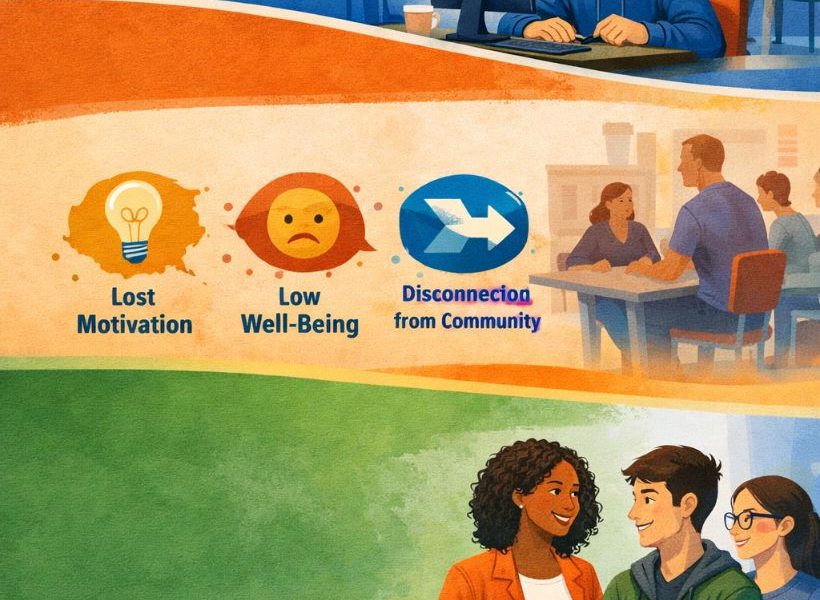
In recent years, the term quiet quitting has become widely used to describe a growing shift in how young people relate to work, education, and participation. However, the concept is often misunderstood. Quiet quitting does not mean that young people are giving up entirely. It reflects something more subtle, but equally important: a gradual withdrawal of motivation, emotional investment, and sense of belonging.
Young people who experience quiet quitting typically continue to meet basic expectations. They attend classes, complete tasks, and remain formally present. Yet, beneath this surface, there is a noticeable absence of engagement. Initiative declines, creativity fades, and participation becomes minimal. What remains is a functional presence without a meaningful connection.
This phenomenon is not simply an individual choice or a matter of attitude. It is often a response to the environments in which young people find themselves. Increasingly, they face unclear expectations, limited recognition, and a lack of genuine opportunities to contribute. In many cases, they do not feel heard, valued, or supported. Over time, this leads to disengagement, not as a sudden decision, but as a gradual adaptation.
The consequences of quiet quitting extend beyond productivity or performance. When young people disengage, they risk losing confidence in their abilities, their sense of purpose, and their willingness to actively participate in society. This can affect their long-term development, employability, and overall well-being. It also represents a missed opportunity for communities, organisations, and institutions that depend on the energy and perspectives of young people.
For these reasons, quiet quitting should not be approached as a problem to correct, but as a signal to understand. It highlights the need to rethink how we design learning, working, and participation environments. It challenges us to ask whether young people feel included, whether their contributions are meaningful, and whether they can see a future for themselves within the systems they are part of.
This project is built on that understanding. It seeks to explore the underlying causes of quiet quitting among young people and to move beyond simplified narratives. Instead of placing responsibility solely on individuals, the project examines the broader conditions that shape engagement, including communication practices, organisational culture, and access to support.
Through its activities, the project will develop practical tools and approaches that help youth workers, educators, and organisations recognise early signs of disengagement. It will also provide strategies to respond in ways that rebuild motivation, strengthen relationships, and create a stronger sense of belonging. Particular attention is given to young people with fewer opportunities, who may be more vulnerable to disengagement due to structural barriers and limited access to support systems.
At its core, the project promotes a shift in perspective. Rather than encouraging young people to simply “do more” or “try harder,” it focuses on creating environments where they can feel connected, valued, and empowered. Engagement cannot be demanded; it must be enabled.
By addressing quiet quitting in this way, the project contributes to a broader effort to support active participation, improve well-being, and ensure that young people are not only present in our systems, but genuinely involved in shaping them.
